
Psoriasis 101
A common condition often causing stress, embarrassment, frustration and discomfort.
Let’s put a stop to the stigma, and get clued up on what’s going on.
Soooooo what is it?
Psoriasis is an autoimmune condition which causes skin cells to multiply much faster than usual. In fact, they might be created up to 10 times faster than the ‘normal’ rate. This is also a lot faster than our skin naturally sheds, so results in clusters of hardened, dead skin cells on the surface of the skin - these are the ‘plaques’ which can appear as pink, red, grey, dark brown or silvery looking scales.
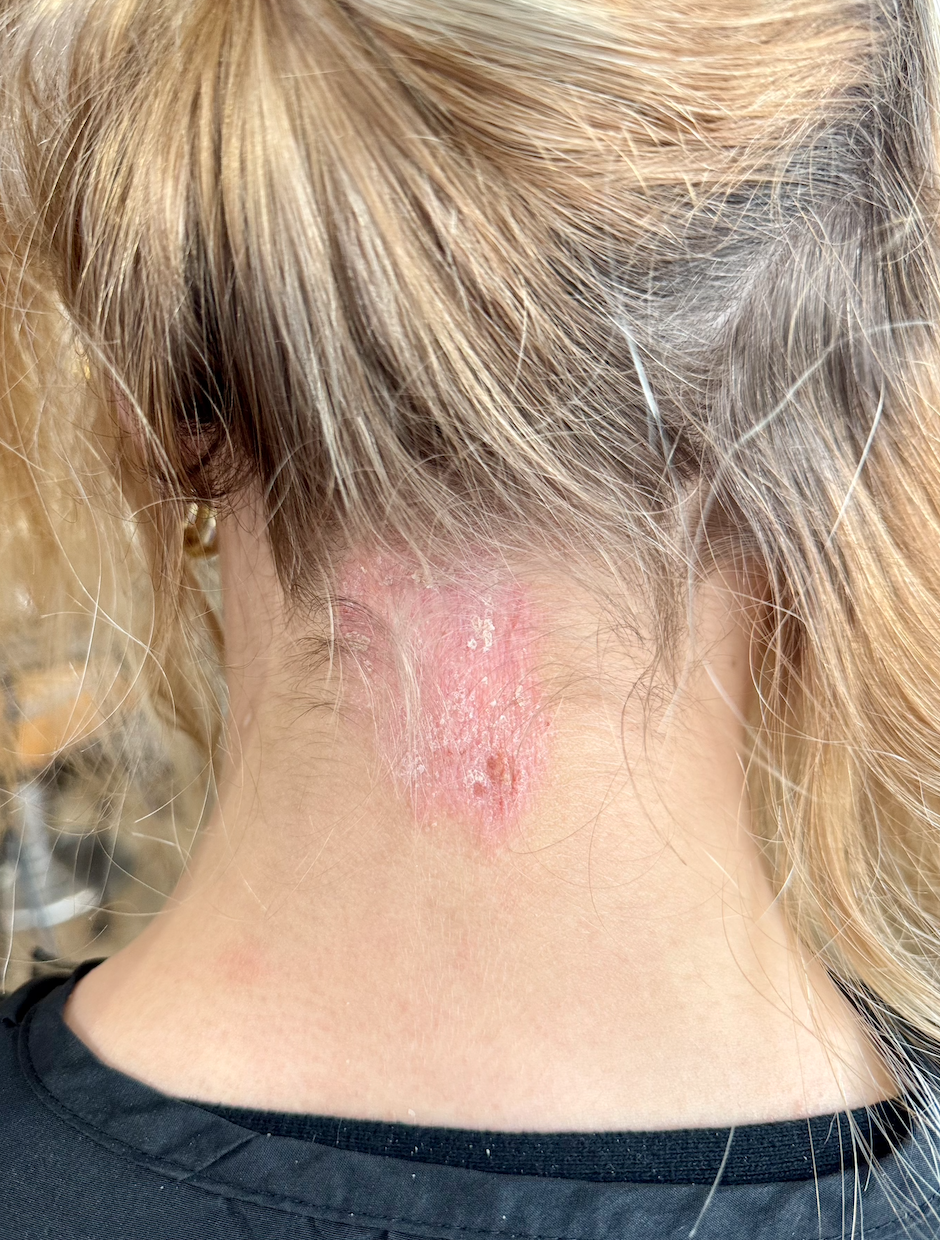
A ‘plaque’ that has been picked at to remove the silver scales, leaving pink/red, sore skin below.
As well as on the scalp and hairline, plaques often appear on other parts of the body including the knees and elbows.
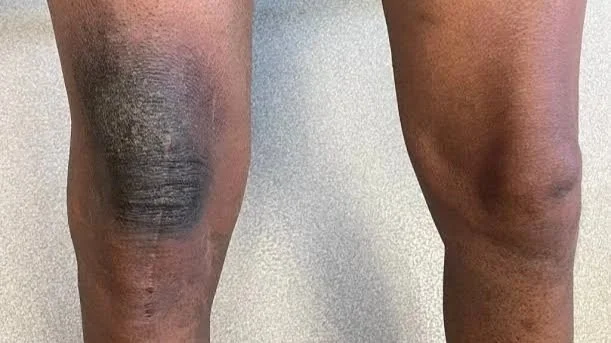
Psoriasis on the knees of a person with dark/medium skin tone
They can feel tight, sore, itchy and restrictive, and some people might feel embarrassed by it. My poor Nan didn’t visit a hairdresser for 20 years at one point, when she felt especially self conscious about her psoriasis.
Severe cases of psoriasis may present as yellow, sticky, asbestos-like scales, covering all or part of the scalp. This condition is known as ‘Pityriasis Amiantacea’, and may lead to hair loss if not treated properly.
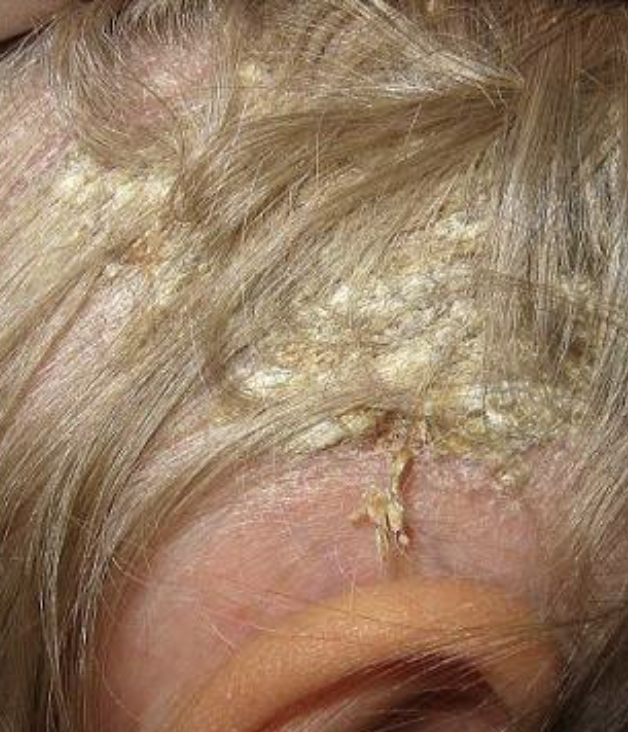
Pityriasis Amiantacea
Although manageable, Psoriasis is not ‘curable’ as such, and is often a lifelong condition with various flare ups along the way.
Some triggers of flare ups may include weather changes, stress, hormonal fluctuations and more.
The trick is in figuring out what the triggers are - and avoiding them - and learning which treatment options work best for you.
These might include medicated shampoos, with active ingredients to break down the excess skin cells - called ‘anti-keratolytics’ - and/or that slow the rate of skin cell turnover.
Severe and chronic cases may need medication from a GP or dermatologist.
In summary…
Psoriasis is a genetic condition, linked to an autoimmune disorder. It is not a sign of poor hygiene, nor is it contagious, and requires proper understanding of the condition in order to treat and manage it.